What if the fix for the ocean's giant garbage patch is to add MORE to it?
No, not more trash. Soil, seeds and floating volcanic rock, to help nature turn the worst clumps into a floating island and a sanctuary for sea life. Here's the idea, the real science for and against it, and what would need testing.
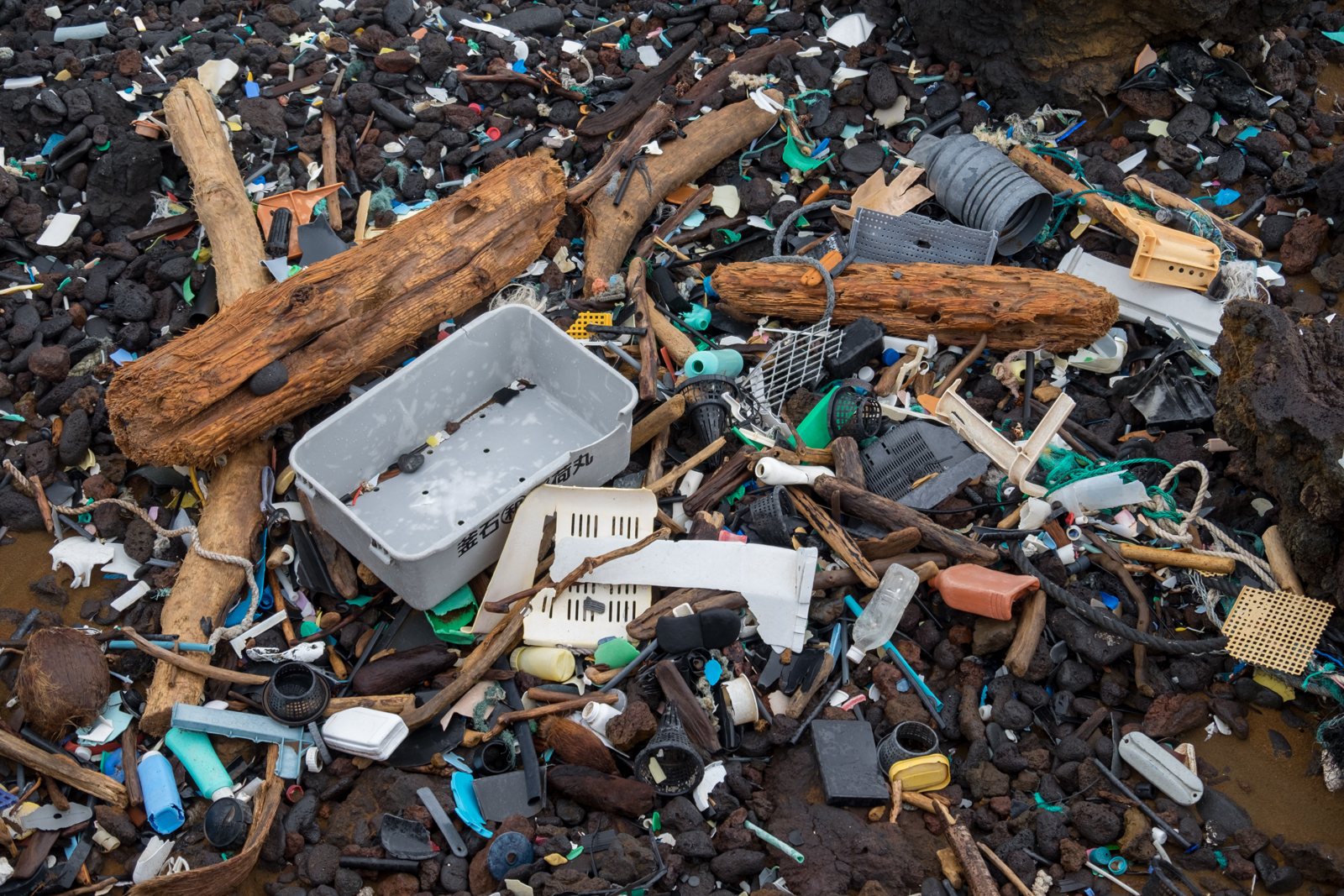
What if the answer to the giant garbage patch in the middle of the ocean is to add more to it?
Before you throw your phone: no, we don't mean more trash. We mean soil, seeds and floating volcanic rock. The idea is to help nature turn the worst, thickest clumps of junk into something alive: a floating island, and a sanctuary for sea life in the middle of the ocean.
It sounds crazy. So did a lot of ideas that worked. Here's the idea, the real science for and against it, and what would have to be tested first.
The short answer
- The garbage patch is real, huge and keeps growing. But it is not a solid island. Most of it is tiny bits spread very thin (NOAA).
- The thickest parts are mostly lost fishing nets, called ghost nets (Lebreton et al., 2018).
- Surprise: sea animals are already living and raising families on the floating junk (University of Hawaii).
- Cleaning it up costs billions, and the trash keeps coming back.
- Nature already makes floating islands. Floating volcanic rock once carried more than 80 kinds of sea life across 5,000 km of ocean (Bryan et al., 2012).
- Our idea: instead of only fighting the patch, help the thickest clumps grow into a living island. Nobody has tested anything like it yet.
First, what the garbage patch really is
The Great Pacific Garbage Patch floats about halfway between Hawaii and California. It covers about 1.6 million square kilometers, which one cleanup group says is "twice the size of Texas" (The Ocean Cleanup). Scientists estimate it holds about 79,000 tonnes of plastic in about 1.8 trillion pieces (Lebreton et al., 2018).
But it's not a floating trash island you could walk on. A government ocean agency (NOAA) says "'Patch' is a misleading nickname." Most of it is tiny plastic bits, like "pepper flakes swirling in a soup," and in some areas you can sail right through and "see very little to no debris" (NOAA).
Here's the part that matters for our idea. The tiny bits are 94% of the pieces but only 8% of the weight. At least 46% of the weight is fishing nets that boats lost or dumped (Lebreton et al., 2018). Those nets tangle up with other junk into big floating clumps. Those clumps are where an island could start.
Plot twist: the trash is already full of life
Scientists checked 105 pieces of floating plastic from the patch. More than 70% had coastal animals living on them, like small crabs and sea anemones that normally live near shore. They found 37 coastal species, and the animals were "not only surviving on the plastic but also reproducing." One scientist called it "a novel community that did not previously exist" (University of Hawaii, Phys.org).
Another study found that some small floating sea creatures, like "by-the-wind sailors" and violet snails, were more common inside the patch than around its edges (Chong et al., PLOS Biology, 2023). It was a small study, but it surprised a lot of people.
Fish also love floating things. Fishing fleets set 30,000 to 65,000 floating rafts adrift in the Pacific every year just to attract tuna, and scientists say "we do not fully understand why" fish gather under them (UNSW).
So the mess is also shade and shelter. That doesn't make the plastic okay. Animals eat it and get tangled in old nets (NOAA, Papahānaumokuākea). But it does mean the patch is not just dead trash.
Cleaning it up: billions of dollars, and it keeps coming back
The biggest cleanup group, The Ocean Cleanup, says the patch could be cleaned "in 10 years at a cost of $7.5bn." By 2024 it had pulled out "more than one million pounds" from the patch, which it said was about 0.5% of it (The Ocean Cleanup).
Not everyone is sure that works. A 2020 study found that even 200 cleanup machines running until about the year 2150 would catch only about 5% of the floating plastic. Critics also worry the nets catch the small animals living on the surface (Hakai Magazine).
And new trash keeps arriving. The scientists who measured the patch titled their paper "Evidence that the Great Pacific Garbage Patch is rapidly accumulating plastic" (Lebreton et al., 2018).