Problems & Possible Solutions

We replanted our forests with trees almost nothing wants to eat. What the fwuck?

Walk through a young tree farm and it's quiet. No berries, no fruit, not much wildlife. Here's why: what animals really eat, the weed killer sprayed on berry bushes, the law that decides what gets replanted, and an idea to bring food back to the woods.
Nov 2, 2026 Β· 10 min read

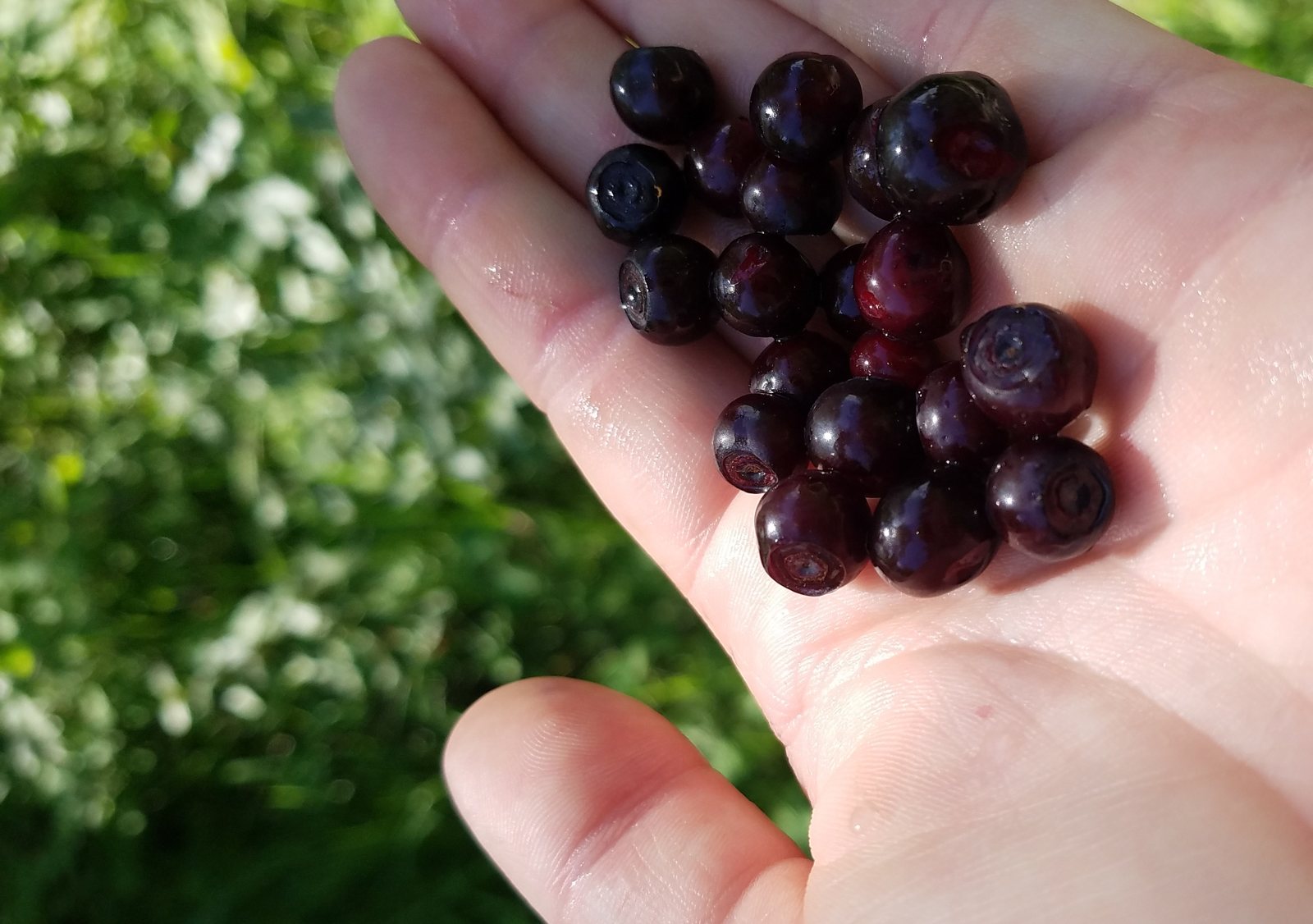
Wild huckleberries: the kind of food that used to fill open forests. Photo: Forest Service - Northern Region, Public domain, via Wikimedia Commons

Go for a walk in a young tree farm in the Northwest. Row after row of the same fir trees, packed tight. It's dark underneath and quiet. You won't find apple trees, berry patches or much fruit of any kind. Mostly you'll find moss and fungus, because fungus doesn't need sunlight. Mushrooms "don't make their own food," the way plants do with sunlight (National Park Service). Food plants do need sun, and under those firs, there isn't any.

So here's the what-the-fwuck question: we cut down the forests and planted them back with trees that almost nothing wants to eat. Where are the animals supposed to get their food? And what if we planted some food back?

We dug into it. Some of the answer surprised even us.

The short answer

  • Animals do eat young fir trees, but only a little, and mostly because that's what's there. What they really want is grass, wildflowers, shrubs and berries (Oregon Forest Resources Institute).
  • When young tree farms grow in thick, the ground gets too dark for food plants. Forestry books call it "a period of low biodiversity" (Forest Measurements textbook).
  • Many tree farms spray weed killer to kill the berry bushes so the firs grow faster (Oregon State University Extension).
  • Oregon's replanting law only counts trees that can become "logs, fiber, or other wood products" (Oregon rule 629-610-0050).
  • When the wild food runs out, animals like bears come looking in town (Colorado State University).
  • Our idea: plant the berries, fruit and nut trees that naturally grow in each area, in places where they'd actually grow and stay, like power-line corridors and the edges of clear-cuts. Feed the whole food web, maybe slow some fires, and feed some people too.

What animals really eat

Deer and elk do nibble young Douglas-fir, mostly in winter. But in a classic study of deer and elk diets in eastern Oregon and Washington, Douglas-fir was only about 3% of their winter food. Three kinds of shrubs were each more than 10% (U.S. Forest Service).

A state forest group says it plainly: "Deer and elk need nutritious grasses, forbs and shrubs common to open areas following fire, storm events or logging" (Oregon Forest Resources Institute). (Forbs are wildflowers and other leafy plants.)

So fir is filler food. Animals eat it when there's nothing better around, and young firs mostly grow where people just planted them.

Bears are a special case. In spring, they peel the bark off young firs to lick the sugary layer underneath. One bear can kill about 70 trees in a day. Timber companies in Washington and Oregon now run more than 900 feeding stations and put out over half a million pounds of bear food pellets a year, just so the bears leave the trees alone (Washington Forest Protection Association).

Read that again. We feed the bears pellets because the forest we planted doesn't have enough food for them.

The berry stage, and why it's disappearing

After a fire, a big storm or logging, there's a short time when the forest is open and sunny. Scientists call it the "early" stage. It's "the only period when tree canopies do not dominate," and it's packed with plants and life (Swanson et al., U.S. Forest Service). That's when berries, wildflowers and shrubs take over.

That stage is where the animals eat:

  • A big study by 21 scientists looked at elk food across 11 million hectares of western Oregon and Washington. The best summer food was on less than 5% of the land, "primarily" in that early, open stage, and they warned about "declines" of it (Cook et al., Wildlife Monographs, 2018).
  • Oregon's black-tailed deer dropped from about 452,000 in 1979 to about 320,000 in 2004. The state wildlife agency blamed it partly on losing that open, early forest (Oregon Department of Fish and Wildlife).

And here's the part that makes you say it out loud.

It's a whole food web, not just deer

A forest is supposed to work like a circle. Plants feed small animals, and small animals feed bigger ones. When the open, early forest is full of plants, it's also full of insects, and "these insects, in turn, provide food for songbirds, bats and reptiles" (Oregon State University Extension). Berries and seeds feed mice, chipmunks and birds. Those feed hawks, owls, foxes, bobcats and cougars. Take out the food at the bottom, and the whole circle gets thinner.

Is that why animals are showing up in town?

People often say animals come into towns because we took their land. That's part of it. But food matters too. A Colorado State University study of bears in Aspen found the bears actually prefer wild berries and acorns over trash. "When natural food sources were lean," the researchers said, the bears went after "more easily attainable human food" (Colorado State University). In other words: when the wild food runs out, the bears come to us.

The berry bushes get sprayed on purpose

After replanting, many tree farms spray weed killers to get rid of the shrubs and leafy plants competing with the baby firs. Foresters call it "conifer release." Oregon State University's guide lists salmonberry, a berry bush, as one of the top plants to kill (OSU Extension).

In one Oregon experiment, a normal amount of spraying, the kind used on more than 2.5 million hectares in the region, left "simplified, low-cover plant communities." Heavy spraying left so little food that browsing animals hardly mattered at all (Stokely et al., 2018).

So the one time a tree farm could be full of berries, the berries are often sprayed so the timber grows faster.
The law decides what goes back in the ground

In Oregon, landowners must replant within 2 years after logging. And a replanted tree only counts if it's "capable of producing logs, fiber, or other wood products" and "marketable" (Oregon rule 629-610-0050). A berry bush doesn't count. Neither does a crabapple tree.

But here's a surprise: Oregon already has a little-known rule that lets smaller landowners, with 10 to 5,000 acres, skip replanting on a small piece of their land to grow wildlife food plots instead. It's only 1% to 2.5% of their land, at most 50 acres, and the biggest landowners, with over 5,000 acres, aren't allowed to use it (Oregon rule 629-610-0100).

So the idea already exists. It's just tiny.

Do food plants change how fires burn?

This part surprised us. In a big 2013 fire in southern Oregon, scientists found young tree-farm plantations burned about 30% more severely than the older public forest next door (OPB, Oregon State University). Rows of same-age young trees, packed together, carry fire well.

Leafy trees burn differently. Trees like aspen hold more water and don't have the flammable oils that pines and firs do. In one test burn, a fire roaring through conifers "failed to sustain itself upon entering the leafed-out hardwood portion of the plot" (CTIF). Fire experts are careful to add that leafy trees still burn in extreme drought. But mixing in green, leafy food plants could help slow some fires instead of feeding them.

What about all the paper we stopped using?

We were sure this one would be a big deal. We use way less paper than we used to. US paper use fell about 32% from 2000 to 2020 (USPS Office of Inspector General).

But it turns out that hasn't saved many Northwest trees. Here, trees are cut mostly for lumber and plywood. Paper is made largely from sawmill leftovers and recycled paper. Recycled fiber was 44% of everything US paper mills used in 2024 (American Forest & Paper Association). And all those online-shopping boxes made cardboard grow (IndexBox).

So the paper idea was a good guess, but the facts don't back it.

The idea: plant food back into the forest

Here's the what-if, adjusted to what the facts say would actually work.

  1. The giant power lines through the mountains. We're not talking about the poles along the road. These are the huge steel towers that carry high-voltage lines across mountain ranges, with long cleared strips underneath. The wires do need room: the main Northwest power agency keeps a 25-foot safety zone between the wires and the tallest a tree will ever get, and the wires can sag up to 20 feet lower on a hot day (Bonneville Power Administration, BPA farming guide). Overgrown trees touching power lines in Ohio started the giant 2003 blackout that left 50 million people in the dark (WDIV ClickOnDetroit). But on those big lines the wires are usually way up high, and apple trees aren't that tall. A full-size apple tree, the kind loaded with the apples people eat and bake into pies, tops out around 30 feet even if nobody ever prunes it (Extension apple guide). So where the wires are high, full-size apple, pear and plum trees could fit, with a little pruning now and then to keep them in check. Where the wires sag lowest, plant berry bushes. Leave a lane open so repair trucks can get through. Use whatever grows well in that area. In the Northwest that's huckleberry, salal, Oregon grape, serviceberry, elderberry, wild plum and Pacific crabapple, plus the good eating and pie apples people love, and pears and plums, for people.

Why not just crabapples? Because the apples we love aren't really native anywhere here either. Scientists traced the eating apple back to wild apple forests in Kazakhstan. Traders on the old Silk Road carried seeds from the best fruit, and that's how apples spread around the world (Cornell University). People spread them because they're delicious. We can keep doing that.

You might say, "but those power lines are already covered in blackberries." Look closer. Those are mostly Himalayan blackberry, an invasive plant from overseas that Oregon State University calls "a widespread invasive plant that grows throughout the Pacific Northwest." It moves in where nothing else is planted and crowds out native plants (Oregon State University). Right now, that's all you get. 2. Clear-cut edges, old logging roads and landings. Leave unsprayed berry patches, and plant clumps of native hazelnut, Pacific crabapple and Oregon white oak, whose acorns feed everything from deer to birds. 3. High open slopes. Native huckleberry fields used to be kept open by fire that local tribes set on purpose. Today one national forest says its huckleberry fields are in "long-term decline from conifer encroachment, fire suppression, drought, and invasive species." In plain words: trees are moving in and the fires that kept the fields open stopped (U.S. Forest Service, Gifford Pinchot National Forest). 4. Change the rules a little. Let native fruit and nut plants count for a small part of required replanting, and open the wildlife food-plot rule to big landowners too.

Who could do it? Utilities, which already manage those corridors. Tribes. Hunting groups like elk and grouse foundations, which already plant fruit trees for wildlife in other states (Ruffed Grouse Society). And state forestry and wildlife agencies.

And feeding people?

People used to head into the woods and come home with fruit and berries for pies and jam. Today the best most of us find is a tangle of those invasive blackberries on the side of the road, and moss and fungus under the planted firs.

You can already pick berries for yourself on many national forests. One Washington forest allows 1 gallon a day and 3 gallons a year with a free permit (Gifford Pinchot National Forest). And free public "food forests" already exist in cities. Seattle's Beacon Food Forest has about 7 acres of fruit and nut plants anyone can pick, any time (Wikipedia).

One honest catch: fruit draws bears. In Jasper, Canada, the national park service gives people a free replacement tree if they remove a non-native fruit tree, to keep bears out of town (Parks Canada). So people-food orchards belong near towns, like Beacon's. Wild berry patches belong out in the woods, for the animals.

So, what the fwuck?

We cut the forests, planted back rows of timber, sprayed the berries and wrote rules that count only trees that can be sold. Then we feed the bears pellets because there's nothing for them to eat.

Nobody has to be the bad guy. Timber is how a lot of people make a living. But a forest can grow wood and feed animals. Some of the food plants would just need a place, and a rule that lets them count.

Easy things you can do

  • Pick wild berries the right way: check the forest's rules, take only what you need, and never sell them.
  • Plant native berry bushes like Oregon grape, serviceberry or huckleberry in your own yard.
  • Ask your power company if it plants low native shrubs in its corridors.
  • Share this with anyone who manages land. Good ideas start as crazy ones.

How this was made: researched and written with the help of AI, then fact-checked and approved by a person before publishing. Every fact links to its source. Spot a mistake? Tell us.

Keep reading

Problems & Possible Solutions

What if the fix for the ocean's giant garbage patch is to add MORE to it?

No, not more trash. Soil, seeds and floating volcanic rock, to help nature turn the worst clumps into a floating island and a sanctuary for sea life. Here's the idea, the real science for and against it, and what would need testing.

What the Fwuck?!

We put plastic in everything. Now it's in everyone. Why are we acting like it isn't happening?

Tiny bits of plastic have turned up in human blood, hearts and bottled water, and most plastic never gets recycled. Glass doesn't shed plastic and can be remade forever. So why aren't we using it? The honest answer, explained simply.

What the Fwuck?!

Charge twice as much, make twice as much: oil company profits doubled. Here's the math.

Shell just doubled its profit. Pump prices jumped far more than the oil they're made from. Here's where the extra money goes, why electric cars and biodiesel didn't bring prices down, and what the numbers actually say, explained simply.