Roadster Track Mode explained: a robot-powered wing and fans that pull 2 g
Tesla says the new Roadster's Track Mode gives 'approaching F1' downforce. Here's how the moving wings, Optimus actuators and suction fans work, in plain words.
The stuff that makes you say “what the fwuck?”
New cars, self-driving, EVs and driving tips that actually help.

Tesla says the new Roadster's Track Mode gives 'approaching F1' downforce. Here's how the moving wings, Optimus actuators and suction fans work, in plain words.

Our own physics estimate, updated with Tesla's new numbers: at 80 kN, the Rocket's 250 kg of nitrogen lasts about 2 seconds, and the Thrust's tank about 5. Every step and assumption, shown.

Not the flying version, not yet. The FAA says it isn't an aircraft, NHTSA says it's watching, and Tesla says the Rocket isn't approved for roads. What the rules say, in plain English.

Yes, in short hops. The new Roadster flipped and jumped on nitrogen thrusters at its Oct 15 reveal. What it showed, how it works in plain words, and what is still unproven.

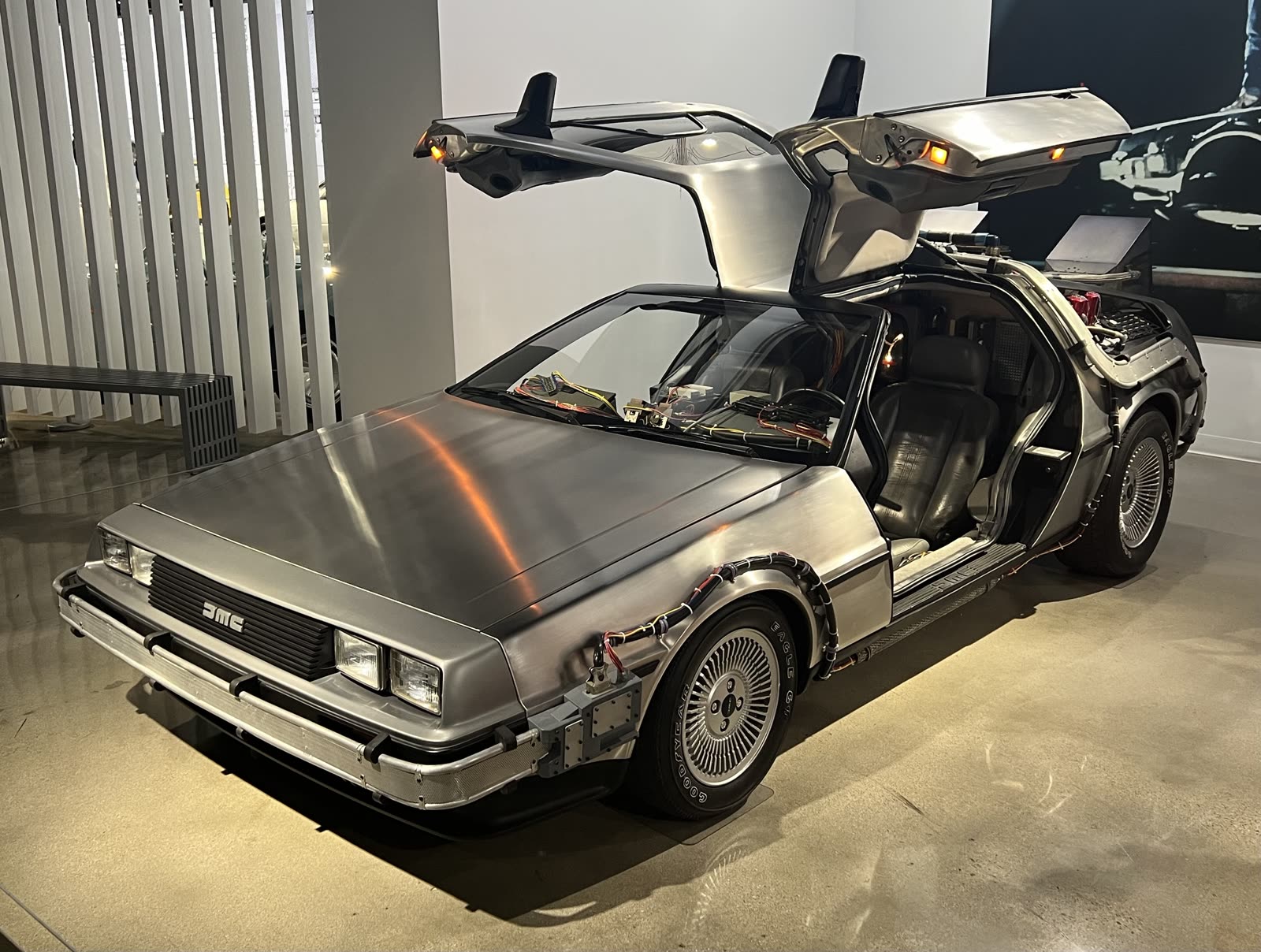
The DeLorean flew in Back to the Future. In 2019 Musk said the Roadster would 'actually do something like this.' In 2026 it did, sort of. A fun comparison.

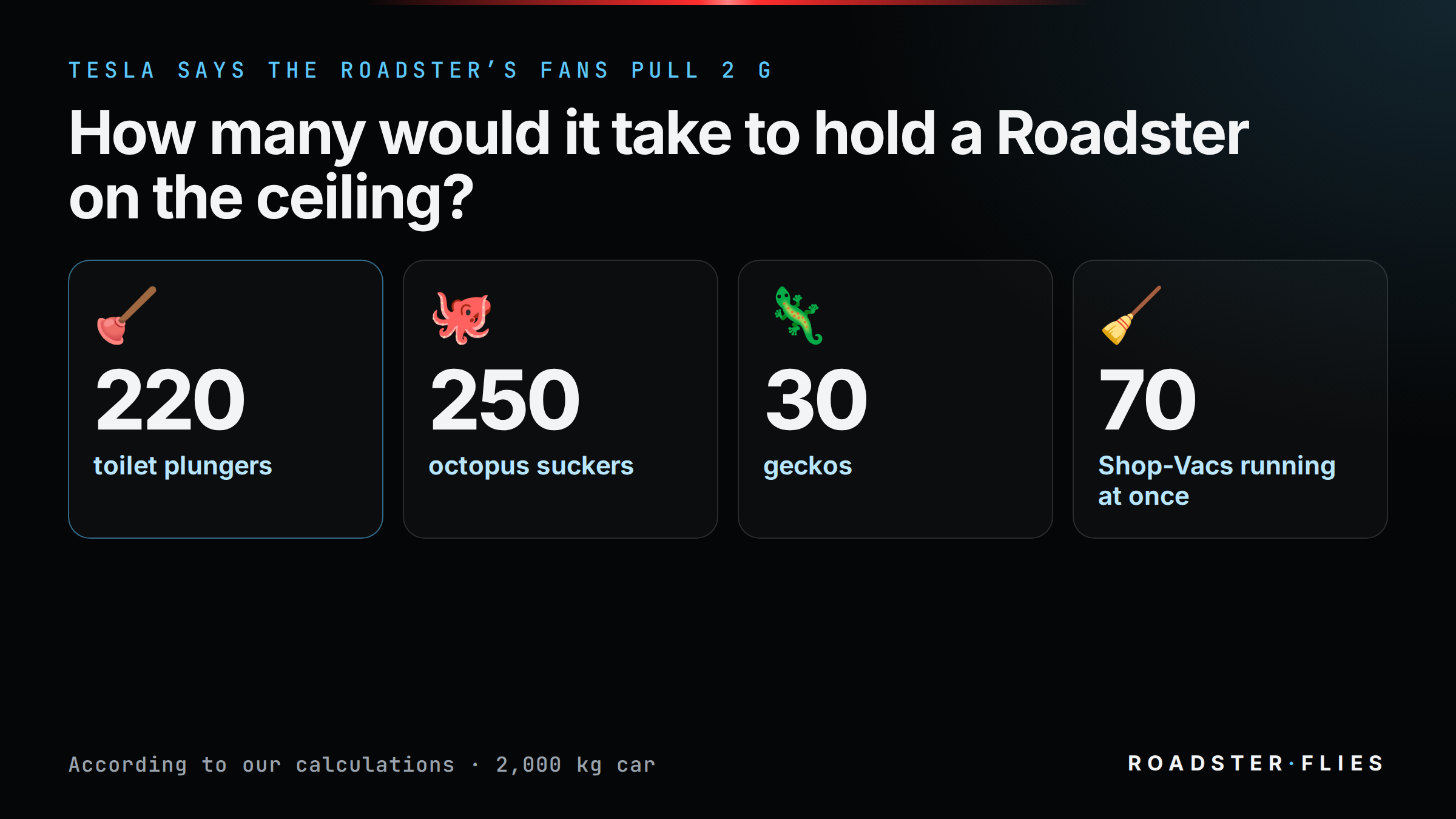
Musk says the new Roadster's fans pull 2 G, enough to drive upside down. We did the math in plungers, octopus suckers, geckos and bounce-house blowers.