Cars & Driving

It was designed after a stealth jet, and it might be the only thing that's cooler.

It takes its looks from the SR-71 Blackbird and the F-35 stealth fighter. Then it does something neither jet can do.
Oct 18, 2026 Β· 4 min read

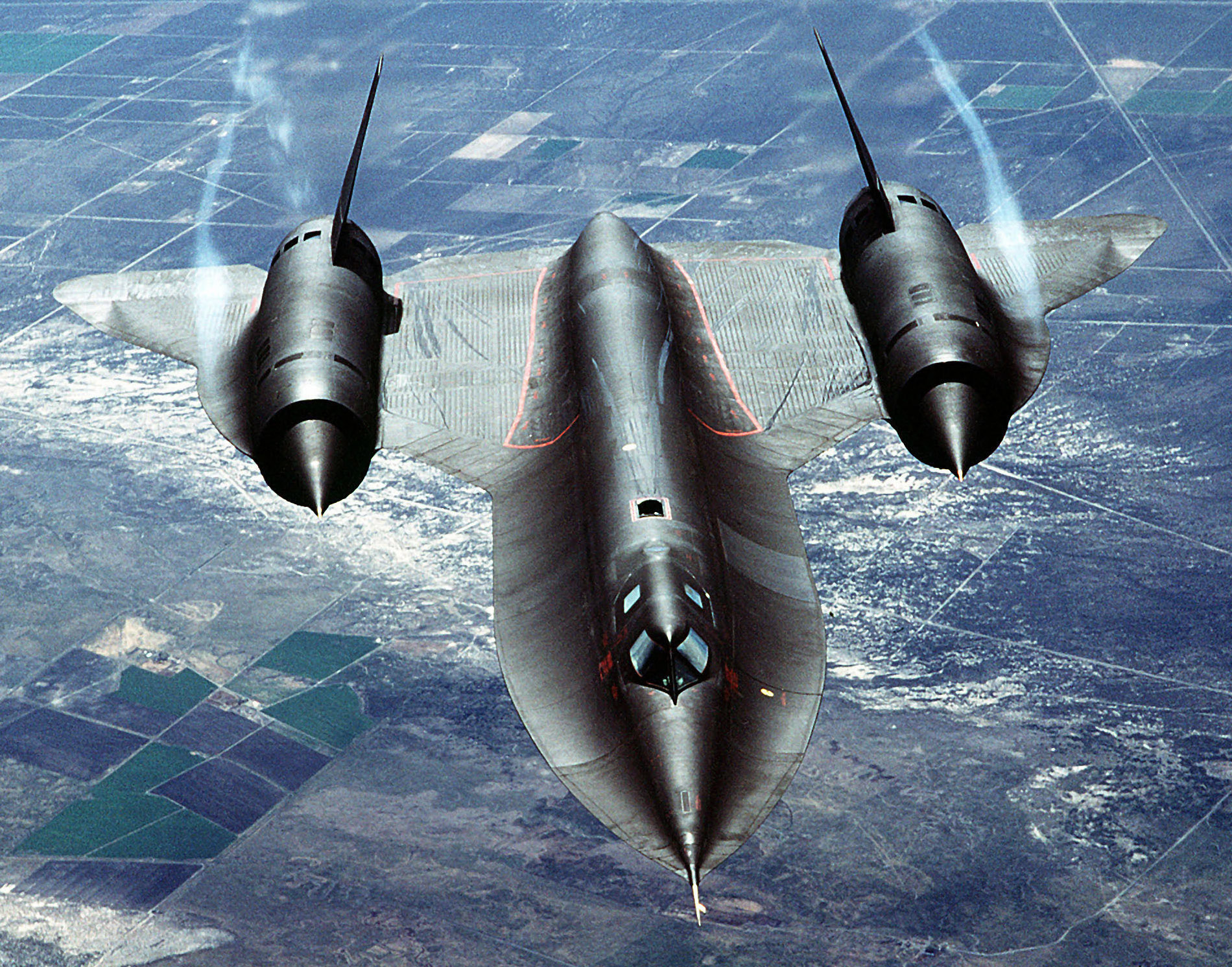
A black SR-71 Blackbird seen head-on from above, vapor trailing from its two engines
The SR-71 Blackbird. Photo: U.S. Air Force, Tech. Sgt. Michael Haggerty, public domain.

This is the SR-71 Blackbird, the Cold War spy plane shaped to dodge radar and still the fastest jet airplane ever flown (Wikipedia). Its new look-alike was designed after it and after the F-35 stealth fighter. And it doesn't need a runway.

It's a car. And it flies.

It's the new Tesla Roadster. The night it was revealed, October 15, 2026, Tesla posted that the "Roadster is inspired by the SR-71 & F-35" (EVXL, Electrek). Then, live in front of a crowd at SpaceX's test site in Texas, it did this:

Tesla's video: the Roadster lifts off, flips over a row of five Teslas and lands on its wheels. Tap to play.

Before that, it drove up a curved wall until it was almost upside down, dropped off, rolled itself right-side up in midair, and landed. Snopes checked the videos and rated them real (Snopes via Yahoo). Is it really flying? What it can and can't do β†’

What it looks like from the driver's seat:

A 17-second look at the screen inside the new Roadster, posted the night of the reveal by the YouTube channel What's Inside? Family. Tap to play.

πŸš€
0.81 s
0–60 mph on the live run
Timed by Tesla. The flying version claims under 0.59 s.
🧲
2 g
of suction from the fans
Twice the car's own weight, Tesla says. Enough to hang on a wall.
πŸ’¨
10
thrusters on the flying version
Four push, four lift, two steer. Nothing burns.
⚑
1 MW+
of power, about 1,341 hp
Two motors, rear-wheel drive, Tesla's engineers say.

All four are Tesla's claims or Tesla's own timing (Electrek, Tesla North). Nobody outside Tesla has measured them yet.

How it sticks, and how it flies

It sticks like a hovercraft in reverse. A hovercraft blows air underneath itself to float. The Roadster does the opposite: four fans suck the air out from under the car, and skirts around the bottom seal the edges. With less air pushing from below, the ordinary air above presses the car down hard, like a powered suction cup. That's how it held onto the wall, and Tesla says it can even hang upside down while parked (Tesla North).

It flies like a balloon you let go of. Tanks hold nitrogen gas squeezed to enormous pressure, rated up to 10,000 psi, when a car tire holds about 35. Open a valve and the gas rushes out one way, pushing the car the other way: up, forward or around. It's the same idea SpaceX uses to steer rockets.

But only for a few seconds. Tesla's engineer Lars Moravy says one fill gives about five seconds of boost, and refilling takes hours from an outside nitrogen supply, not a home outlet (Torque News). So it hops and flips; it doesn't fly across town. How it flies, step by step β†’ Β· Our full thruster math β†’

Three versions

  • Performance: the road car. Two seats, the suction fans and a moving wing, no thrusters. About 210 mph top speed, Tesla says.
  • Thrust: adds thrusters in the back for a launch to 60 in under 0.9 seconds, Tesla says, and a 230 mph top speed.
  • Rocket: the flying one. One seat, because a second gas tank sits where the passenger would. Ten thrusters all around. Invite only, and not approved for public roads.
Compare all three, side by side β†’

What it costs, and when

Tesla hasn't announced a price. Reserving the Performance costs $50,000 ($5,000 now, $45,000 within 10 days); the Thrust costs $250,000 ($5,000 now, $245,000 within 10 days). Production is set for 2028, and Tesla's terms say it "cannot guarantee when your vehicle will actually be delivered or if it will be delivered" (Kelley Blue Book). Price, reservations and the fine print β†’

Is it legal to fly?

The FAA says the car "does not meet the FAA definition of an aircraft," so it isn't regulated like a plane, and the road-safety agency says it's watching (Politico, CBS News). Tesla says the flying version isn't approved for public roads. The rules, in plain English β†’

What's next

Musk says future demos will include "flying over the Snake River or maybe Grand Canyon," and that owners will be able to ask the car to do the tricks by itself on a looping track "crazier even than Hot Wheels" at Tesla's Texas headquarters (Musk on X, Not a Tesla App). No dates yet.

Everything else is on roadsterflies.com: every video, the moments from the livestream, Tesla's promises tracked against what it actually showed, and answers to every question people are asking.

SR-71, Blackbird, F-35 and Lightning II are associated with Lockheed Martin. Roadster Flies isn't affiliated with or endorsed by Lockheed Martin, the U.S. military or Tesla. The aircraft photo is a U.S. government work; its use does not imply endorsement by the Department of Defense.

Sources:

How this was made: researched and written with the help of AI, then fact-checked and approved by a person before publishing. Every fact links to its source. This story first ran on roadsterflies.com, another site from the same family. Spot a mistake? Tell us.

Keep reading

Cars & Driving

Forget the flying. The Roadster's biggest secret is the motor and battery you can't see.

Two small motors that out-muscle a Plaid, a battery that fills in about 10 minutes, and parts borrowed from a robot and a rocket company. Here's the new tech, in plain words.

Cars & Driving

Tesla Roadster price: what we know, what it costs to reserve, and what happens to 2017 buyers

Tesla has not priced the new Roadster. Reserving costs $50,000 or $250,000 by version, and Tesla's terms say it can't guarantee delivery. How it works, and what 2017 buyers still don't know.

Cars & Driving

Roadster Track Mode explained: a robot-powered wing and fans that pull 2 g

Tesla says the new Roadster's Track Mode gives 'approaching F1' downforce. Here's how the moving wings, Optimus actuators and suction fans work, in plain words.