Health & Wellness

Scientists reversed Parkinson's symptoms in mice with a 'low-oxygen pill.' Here's what that really means.

Too much oxygen may be part of what hurts the brain in Parkinson's. A Harvard team made a two-drug pill that lowers it, and sick mice started moving better. What they found, explained simply, and why it's not a human treatment yet.
Oct 22, 2026 Β· 6 min read

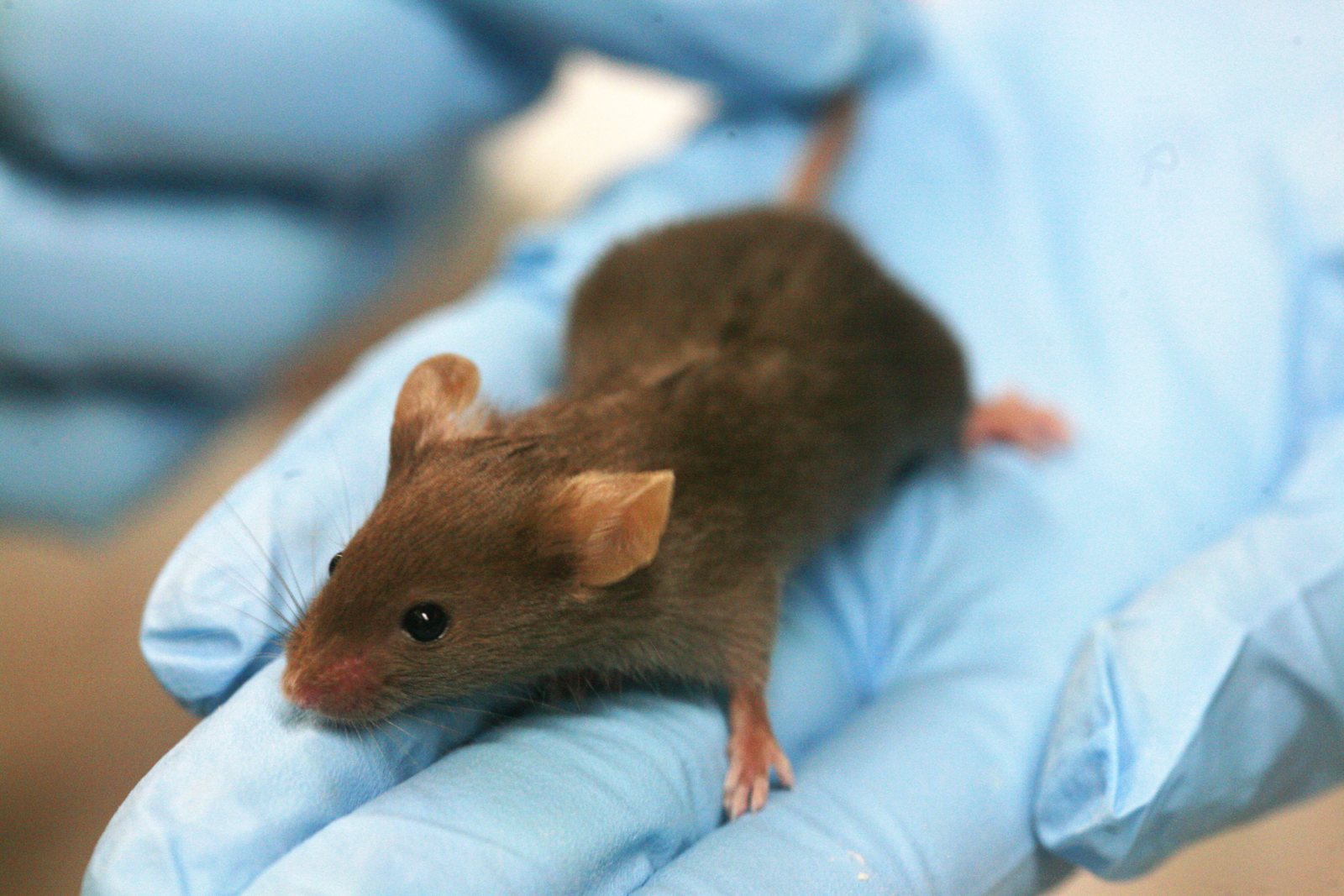
Photo: Rama, CC BY-SA 2.0 fr, via Wikimedia Commons

Most of us think oxygen is always good for us. A team of scientists in Boston thinks that in Parkinson's disease, the brain may be getting too much of it, and that turning it down could help.

In a study published October 9, 2026, in the journal PNAS, they gave mice with Parkinson's-like symptoms a combination of two drugs they call "hypoxia in a pill." (Hypoxia means low oxygen.) The mice were already sick when treatment started, and they began moving better (Broad Institute, PNAS).

This was in mice, not people. No one has tested it in humans yet. Here's what they found, in plain words.

First: what goes wrong in Parkinson's?

Your brain has special cells that make dopamine, a chemical messenger that helps your body move smoothly. In Parkinson's, those cells get damaged and slowly die. That's why people with Parkinson's can have shaking, stiffness and slow movement.

At the same time, a protein called alpha-synuclein clumps up inside brain cells, a bit like gunk building up in a pipe.

More than a million Americans live with Parkinson's, and about 90,000 more are diagnosed each year (Parkinson's Foundation).

The oxygen idea: a power plant that stops burning its fuel

Inside every cell are tiny power plants called mitochondria. They burn oxygen to make energy.

The scientists, led by Vamsi Mootha of Mass General Brigham, Harvard Medical School and the Broad Institute, think the protein clumps damage these power plants. A broken power plant can't burn its oxygen, but the blood keeps delivering it anyway. So oxygen piles up in the brain, with nowhere to go (Broad Institute, 2025).

Leftover oxygen is a problem. It attacks the fatty parts of brain cells, a kind of damage a little like rust forming on metal. "Too much oxygen in the brain turns out to be toxic," Mootha said (Broad Institute, 2025).

So the idea is simple: if the brain can't use all its oxygen, send it less.

Step one (2025): mice breathing thin air

Last year, the same lab tried the most direct way to do that. Mice with Parkinson's-like disease lived for weeks breathing air with 11% oxygen instead of the normal 21%. That's about as thin as the air on a 16,000-foot mountain (Broad Institute, 2025, Nature Neuroscience).

  • Mice put in thin air right away never lost their dopamine cells and never developed movement problems.
  • Mice that started thin air only after their symptoms appeared got their movement back.
  • The protein clumps didn't go away. The low oxygen seemed to protect the brain cells from the damage the clumps cause, not remove the clumps.
  • When the mice went back to normal air, their symptoms came back.

"It tells us that there is a window during which some neurons are dysfunctional but not yet dead," Mootha said (Broad Institute, 2025). In other words, some sick brain cells can still be saved.

But nobody can live in a thin-air tent forever. So the team looked for a pill that does the same thing.
Step two (2026): "hypoxia in a pill"

The new pill is really two drugs working as a team. Think of your blood as delivery trucks carrying oxygen to your body:

  1. GBT601 makes the trucks hold on to their packages. It makes the blood grip its oxygen more tightly, so less gets dropped off in the body's tissues, including the brain.
  2. PT2399 stops the body from cheating. When tissues get less oxygen, the body normally responds by making more red blood cells, like hiring more trucks. PT2399 blocks that signal, so the lower oxygen level sticks.

The mice got the drugs by mouth every day. Here's what happened (Broad Institute, PNAS, ScienceAlert):

  • The setup: scientists put the protein clumps into the mice's brains to start Parkinson's-like disease. They waited six weeks, until the mice had movement problems, and only then started the pill.
  • Movement improved. Over six weeks, treated mice got faster at climbing down a pole and could hang on to a cage lid longer. Untreated sick mice kept getting worse. Mootha told ScienceAlert improvement can start within one to two weeks.
  • Brain oxygen went down, and so did signs of the "rust" damage.
  • It worked about as well as the thin air did in the Parkinson's mice, the team says.
  • Not everything improved. One test of anxious behavior didn't change.

The pill also helped mice with two rare diseases where the cell's power plants fail. In a model of Leigh syndrome, the typical (median) lifespan went from 62 days to 158. In a model of Friedreich's ataxia, it stopped the disease from getting worse, though it didn't undo the damage already done.

The big "buts"

  • Mice aren't people. Mootha himself said: "All of our work to date is pre-clinical, in mouse models, and much more work is required before moving this concept into humans" (ScienceAlert). There's no human trial announced and no timeline (Broad Institute).
  • Moving better isn't the same as healing. The new study's main paper didn't count dopamine cells, so it doesn't show the pill saves them (ScienceAlert).
  • Low oxygen can be dangerous. Over a long time it can strain the heart and lungs. In the mice, six weeks of treatment showed no sign of that, but people are different.
  • These drug families have a history. GBT601, also called osivelotor, has been tested by Pfizer in people with sickle cell disease (ClinicalTrials.gov). An earlier drug from the same family, Oxbryta, was pulled from the market worldwide in 2024 after more deaths and pain crises showed up in sickle cell patients taking it (AABB). PT2399 is a lab cousin of belzutifan, an approved kidney-cancer drug (UT Southwestern). Any of this would need careful testing in people with Parkinson's.

Please don't try low oxygen at home. The researchers warn that breathing low-oxygen air without a doctor watching, especially only part of the time like overnight, can be dangerous and may even make the disease worse (Broad Institute, 2025). Anyone with Parkinson's should keep following their own doctor's treatment.

The bottom line

For years, Parkinson's research has focused on the protein clumps. This team is attacking the problem from a different side: the oxygen the brain can no longer use. In mice, turning it down with a daily pill brought back movement, even after the disease had started.

It's an early result, and a lot of mouse discoveries never make it to people. But it's a genuinely new idea, and drugs from these same families have already been tested in people for other diseases, which could help if it ever moves to human trials.

For families living with Parkinson's

Parkinson's often means a lot of pills on a tight schedule, and many people live with it on their own. For someone you love who lives alone, our app Support-O does a simple morning check-in and lets them keep a clear photo list of every medication. More below.

Sources:

How this was made: researched and written with the help of AI, then fact-checked and approved by a person before publishing. Every fact links to its source. This story first ran on roadsterflies.com, another site from the same family. Spot a mistake? Tell us.

Keep reading

Health & Wellness

This is insane. AI makes things up. Lawyers got caught. Now it's in your emergency room.

AI that invents fake facts has already embarrassed lawyers and judges in more than 2,000 court cases. Now most doctors use it, many ERs run on it, and studies show even experts follow it when it's wrong. Here's the evidence, and how to protect yourself.

Health & Wellness

Your body is full of 'zombie cells' that speed up aging. Mayo Clinic just found new ways to fight them, including one from tomatoes.

Old cells that won't die keep pumping out inflammation as we age. Seven Mayo Clinic studies show how to spot them, why they cause harm, and treatments that helped old mice get stronger and sharper. Explained simply.

Health & Wellness

Scientists solved a 30-year mystery behind Crohn's and colitis: in some people, the body attacks its own inflammation brakes.

For some people with inflammatory bowel disease, the immune system makes antibodies that switch off the body's natural anti-inflammation signal. The discovery explains a 30-year-old genetic clue and could lead to a blood test and targeted treatment. Explained simply.